For consumers and personal projects
Turn a personal idea into a practical project plan.
For example, develop a bespoke desk or home improvement by explaining the idea, exploring designs, reviewing materials and indicative costs, then sharing the plan with the people you choose to involve.
Start with your idea
Describe what you want to achieve in plain English. Add relevant photos, sketches or documents to help explain a home improvement, bespoke item or personal project.
A starting brief based on your idea and references.
Work through the important questions
Use the guided brief to clarify what you need, when it is needed and how you want it delivered. Identify measurements, preferences, constraints and decisions that still need attention.
A clearer brief with fewer important details left unexplained.
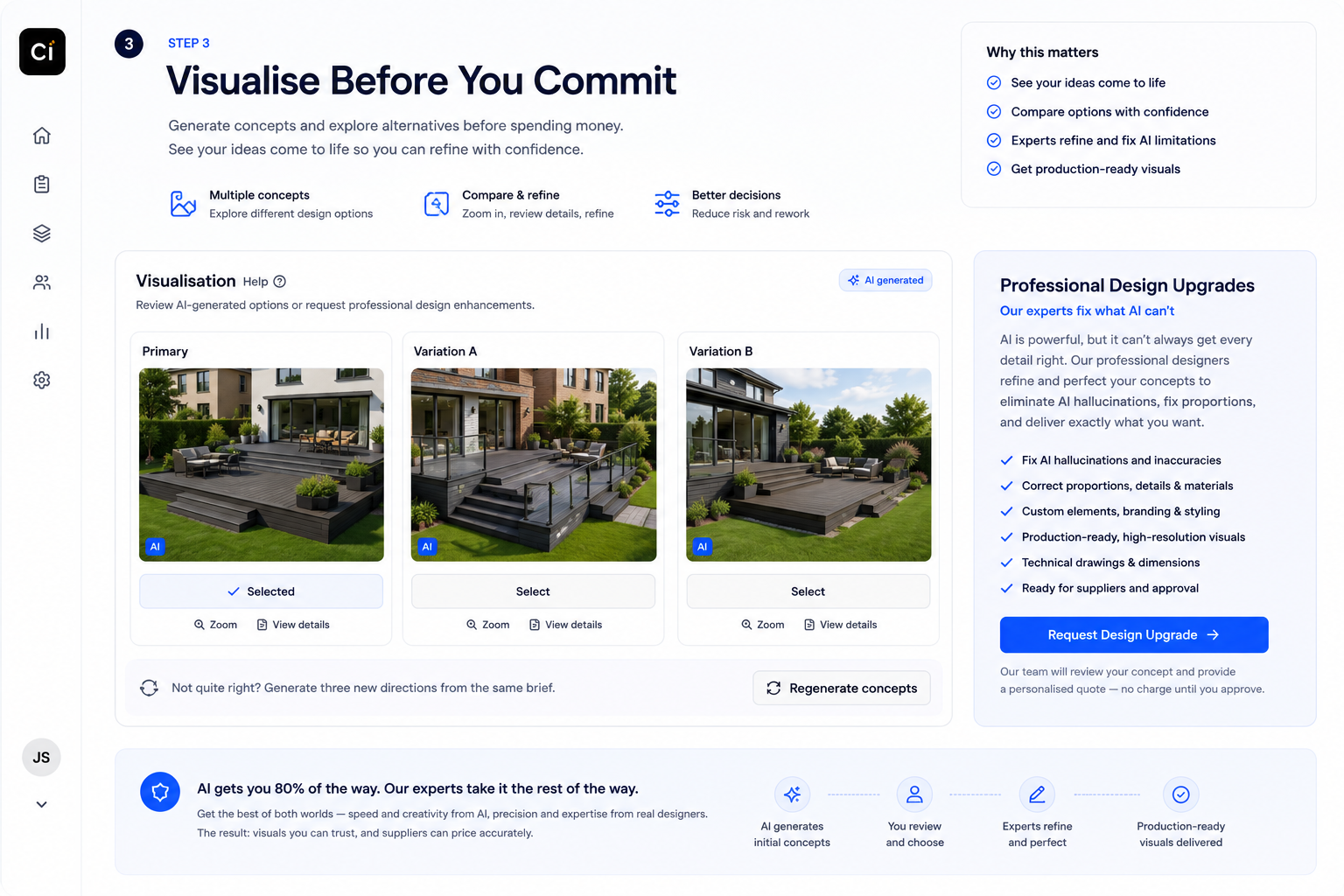
Explore visual ideas when they help
For projects where appearance matters, explore and compare visual concepts, then refine the direction you prefer. Check technical details with the relevant specialist before production.
A design direction you can discuss and develop with a supplier.
Understand the costs and components
Review indicative labour and materials costings and what is achievable within your budget. Break a larger project into its main components and review specifications and materials.
A practical scope and indicative budget to support supplier discussions.
Share the plan and discuss quotations
Use a project share link to explain the requirement to the people you involve, such as family members, a designer or contractors. Compare their proposed approach and quotation against the same brief.
A common reference for questions, quotations and decisions.
Manage the work as it progresses
Keep project documentation, designs and decisions together. Refer back to the delivery plan and milestones as you coordinate with the people doing the work.
A project record you can return to throughout delivery.
Keep your projects in one place
Reopen a saved project whenever you need its scope, budget or documents. Use the same workspace for other personal projects and retain the context for future improvements.
Easy access to the projects and information you are working with.